Biodiversity summit and Artworlds symposium

A day of talks about biodiversity for climate protection: nature as climate solution, not casualty. Carbon and the terrestrial biosphere, our earth is a closed carbon system. The increase in the carbon circulating between air and ocean so ocean is degassing more than it is storing as sediment. After 100 years, 60% of a pulse of co2 is taken into sediment and after 700 years the last 20% is still very slowly being removed. The carbon debt due to land clearing is enormous. Clearing in developing worlds for soybean and palm oil production is currently rapid, and logging persists in developed nations like Australia who still have some virgin forest left. For a stable carbon sink, trees need to be permanent – old growth, a plantation is not a stable carbon sink (monoculture feast/famine), and what about biodiversity, habitat, ecosystems!! 50% of the world’s forests are gone, 25% are in primary condition, less than 20% are old growth, the rest are degraded due to human impact, such as selective logging.

For the temperature to be capped at approx 2 degrees increase due to global warming, the co2 emissions must peak now, and be reduced as quickly as possible to shorten the very long recovery as temperatures come down very slowly. If nothing is done our temperature will be approx 6 degrees warmer by 2100. Current carbon accounting systems used for Kyoto flawed, only deals with land use change and so allows virgin forest to be replaced by plantation without accounting for carbon loss, yet the new planting is counted as a carbon credit, so logging industry lobbying has corrupted the carbon accounting system. The carbon credit system used to deal with fossil fuel emissions, allows developed nations to continue polluting by paying developing nations toward reducing forest clearing for industry development. Logging needs to be included as a carbon debt. The rich get richer, the poor get the picture, and meanwhile, the 6th mass extinction of species on the planet rapidly continues, and it has been caused by humanity. Certainly cancels out the idea that human animals have achieved anything good since deciding to ‘transcend’ the hunter/gatherer nomadic and seasonal lifestyle.

I had the opportunity to present a paper at the Artworlds symposium at ANU called ‘Sharing Culture in a Global Market Economy: a case study from Western Arnhem Land’ which responded to Luke Taylor’s text Seeing the Inside: Bark Paintings in Western Arnhem Land 1996 an my experience in Gunbalanya for the Rock Art Field School.
A Thousand Plateaus – Becoming Animal

Reflections on the rhizome “the line of ‘nomad’ thought”, the abolishing of hierarchical structures in the process of writing (or making). In psychoanalytical terms, Massumi explains, “The central perspective is…to promote human relations that do not automatically fall into roles or stereotypes but open into fundamental relations of a metaphysical kind that bring out the most radical and basic alienations of madness or neurosis.” A dissipation of constructed dualism in the cauldron of multiplicity. For the conscious embodiment of becoming we must be the sorcerer, the magician who, for Crowley, “brings all set ideas and judgments into question, which often makes him appear in a questionable light himself. As a creative creature, he knows no conscience.” Paths open are taken without judgment and what was hidden is revealed. Hierarchical laws imposing order are broken when convenient anyway, and are therefore grounded in hypocrisy. A clearer analysis of this feature of human law is proposed by Bataille, “When a negative emotion has the upper hand we must obey the taboo. When a positive emotion is in the ascendent we violate it.” Therefore the taboo is irrelevant when we follow our instinct. Becoming being our true state of instinctual negotiation, to always freely form alliances where borders to the known are sensed without the restriction of an external law. “A Thousand Plateaus is an effort to construct a smooth space of thought…an open system.” The human who is becoming unfolds the magic of life, and just like fellow animals negotiating nature, is free. Creative practice is, in essence, the space of becoming allowed to a select few. The continual work to reach a plateau which, as Massumi explains, is “when circumstances combine to bring an activity to a pitch of intensity that is not automatically dissipated in a climax…A Thousand Plateaus tries to combine conceptual bricks in such a way as to construct this kind of intensive state in thought…The way the combination is made is an example of what Deleuze and Guattari call consistency…a dynamic holding together or mode of composition.” The relevance of this text to painting is invited, “lift a dynamism out of the book entirely, and incarnate it in a foreign medium, whether it be painting or politics…pry open the vacant spaces that would enable you to build your life and those of the people around you into a plateau of intensity.” That’s my kind of bible.

Post-Minding Animals conference

Like a turtle paddling in the shallows I observed the sharks manoeuvre in the depths of an ocean made of language and questioned wether I really wanted to enter those depths and why? On the day I was there, speakers from the arts spoke in an intimate theatre. I wondered if there was any tension between the artists and animal activists due to the fine line between animal exploitation that some artists tread. The specialised audience created an expectation for dense theoretical papers, which I had not prepared for, my presentation being for a general audience. Video, photography and installation/performance were the preferred mediums to express animal/human relations by the artists, I was the only painter.

Indigenous culture was not mentioned at all in this session by artists. The animals involved were urban pets and farmed animals. My perspective of becoming animal is unable to disassociate from Indigenous culture because it informs my own relationship to animals which are indigenous or feral.

The artists who presented were:

All women.

Steve Baker and Yvette Watt discussed photographs by a woman called Mary Britton Clouse.

A recent exhibition in relation to the theme involving some of the artists Becoming Animal/Becoming Human The work of Sam Easterson interested me the most due to the natural habitat context the animals were in when making the work.

I had the privilege of meeting associate professor Linda Williams and artist Maria Fernanda Cardoso at the conference.

Injalak Arts Centre, Gunbalanya

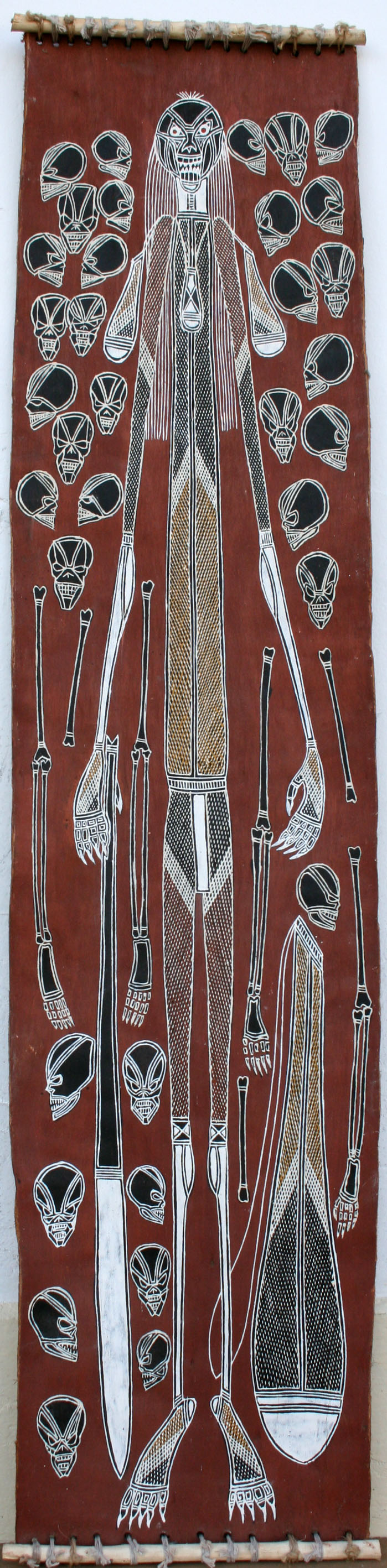
A cultural hub in the Gunbalanya community is the Injalak Arts centre where visitors can meet local artists and see exquisite painting, fibre and sculptural arts being created. I encountered a significant ochre painting on bark by highly skilled painter Graham Badari, which I purchased. I then had the privilege of sitting down with Graham with the painting and listening to the associated stories. The spirit depicted is very powerful and is named Namorrodoh, the shooting star spirit.

nabulanjnomorodo

The work was exhibited in September 2008 at Mossenson Galleries, Melbourne at the ‘Sex, Spirits and Sorcery’ exhibition along with many other phenomenal works by Graham.
I sat with Glen Namundja while he painted and showed me how to grind, not crush, ochre and mix with glue. You can see my crushing attempts with my own ochre in the background.

Gunbalanya, Western Arnhem Land

gunbalanya
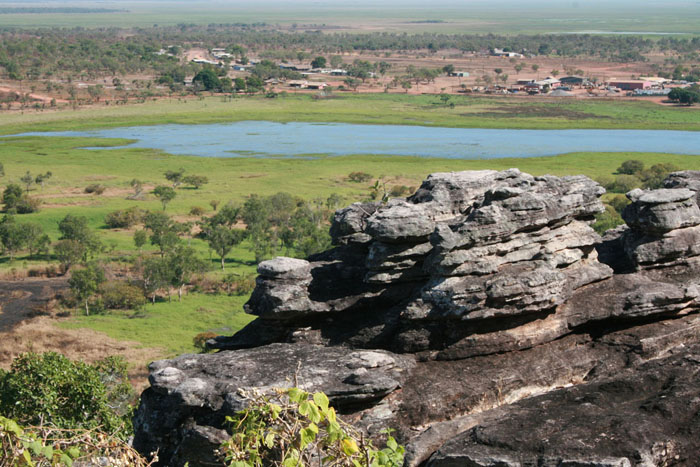
view from Injalak Hill (longtom, a djenj-fish dreaming) of Arguluk Hill (Magpie Goose dreaming) over the flood plain
gunbalanyaweb
view of Gunbalanya from Injalak Hill

Gunbalanya (Oenpelli) is an indigenous community where Kunwinjku is spoken and traditional arts and ceremony is practiced. As Balanda (outsider) I began a process of learning and integration which unveiled the rich creative spring of cultural connection to country and its ecological diversity.

Shroud soup

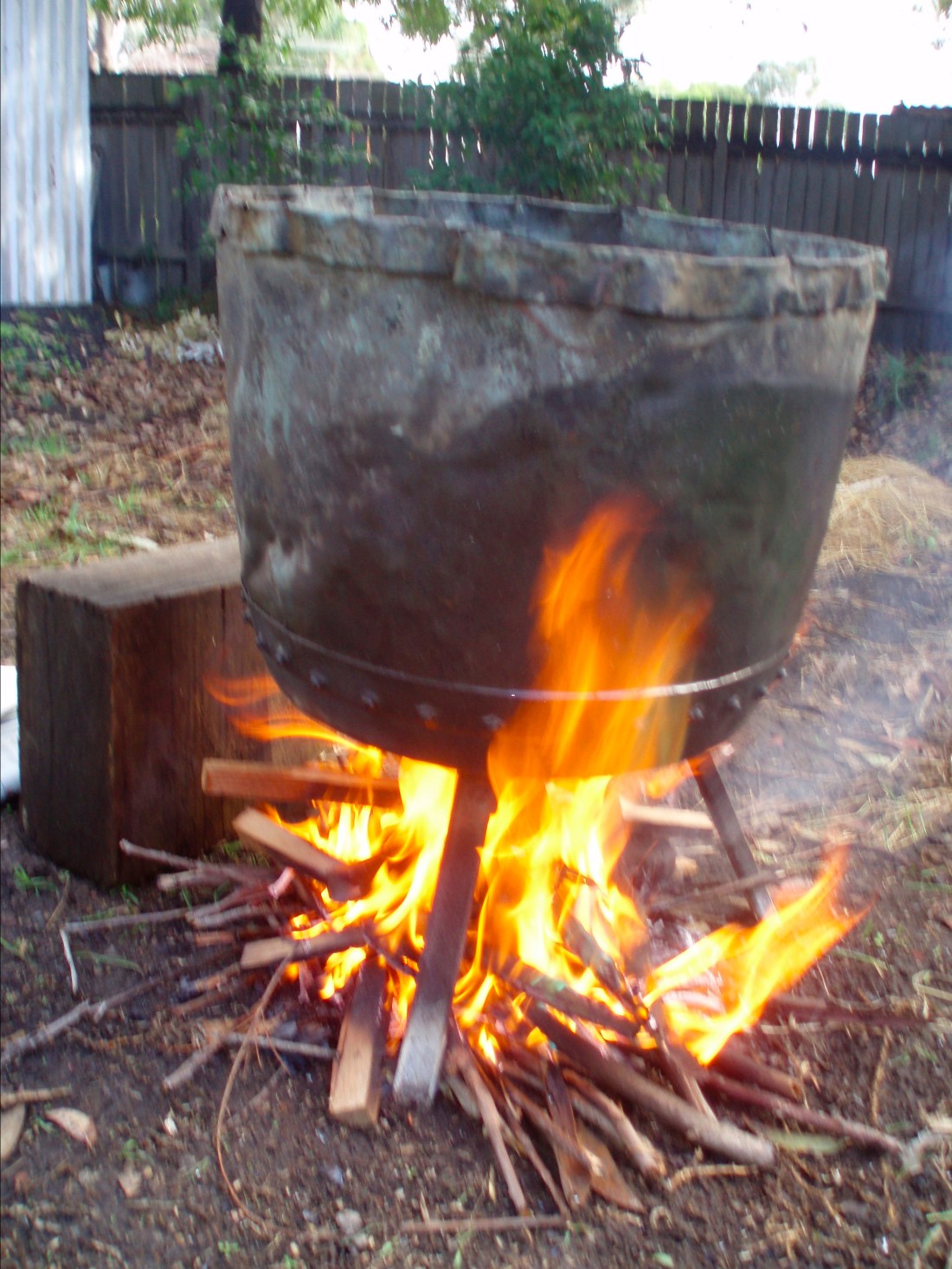
Some cauldron action with the help of my father Tibor and brother-in-law Jason Harding’s skill with a camera. The images demonstrate my attempts to use a non chemical means of neutralizing the bacteria that produces a shroud’s abject smell (which will reduce naturally over an extended period of time).

OLYMPUS DIGITAL CAMERA

Minding Animals Conference

I have been given the opportunity to present at the minding animals conference in Newcastle on the 18th July. The conference runs from the 13th-18th and is filled with local and international speakers from many disciplines discussing animal/human relations.
Below is my abstract.

Becoming Animal: Investigating painting materials and processes that communicate current animal/human relations in Australia

Deleuze and Guattari’s definitive philosophical essay 1730: Becoming-Intense, Becoming-Animal, Becoming-Imperceptible 1987 examines symbioses between animals and human animals in popular mythologies. Their challenge to Western cultural constructions that view animal as other and becoming animal as a process of contagion is discussed in relation to my current practice-led research into the status of animals in Australian visual culture. My reflections on the human animal and becoming in Australian indigenous cultural traditions focuses on the study of animals in rock art and recent fieldwork in Gunbalanya, Arnhem Land. Comparisons between representations of animals in natural history illustration and indigenous painting in Australia seeks to discover the extent to which materials and creative process used in the production of imagery defines the relationship between the artist and their subject.

Female Kangaroo Shroud

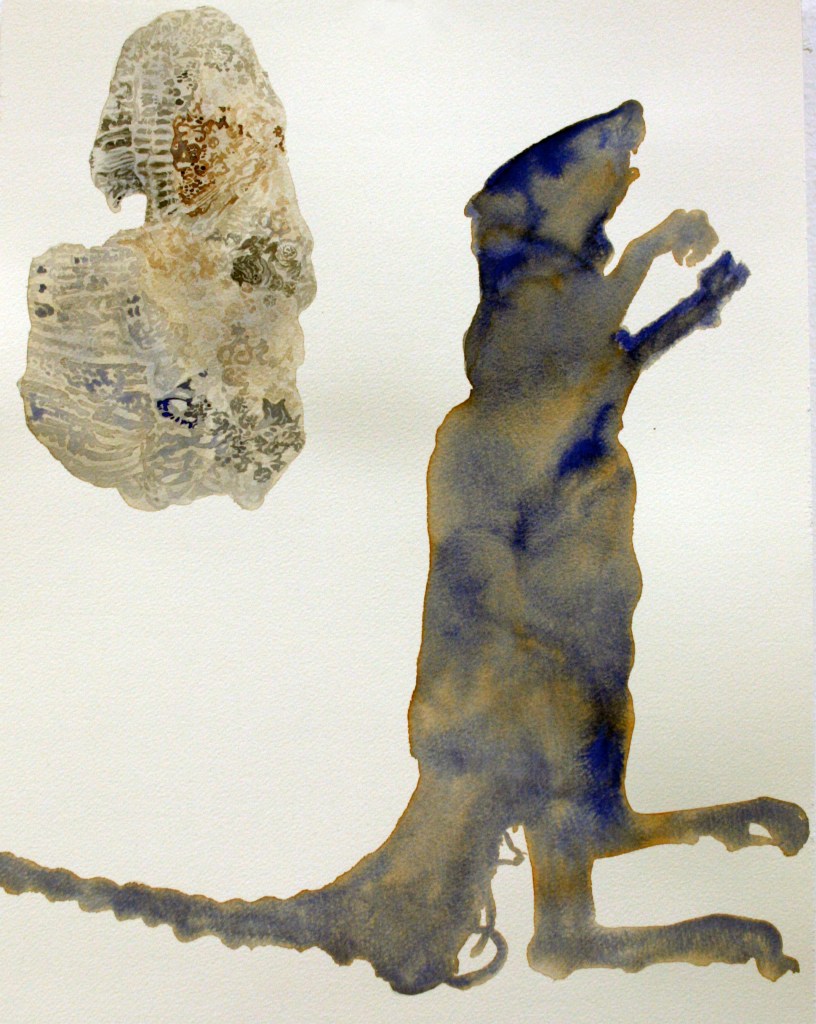
The second phase of my latest experiment in developing a shroud process indicate the black plastic and wet autumn weather created a moist environment which disintegrated the body dissipating definition in the body shape. The first male kangaroo shroud had a well defined body print as it was uncovered and made in summer during drought.

WinterKangaroopost

winter kangaroo 2009-11
Winter Kangaroo 2009‘ 2011 Delek, rabbit skin glue, female eastern grey on canvas SOLD