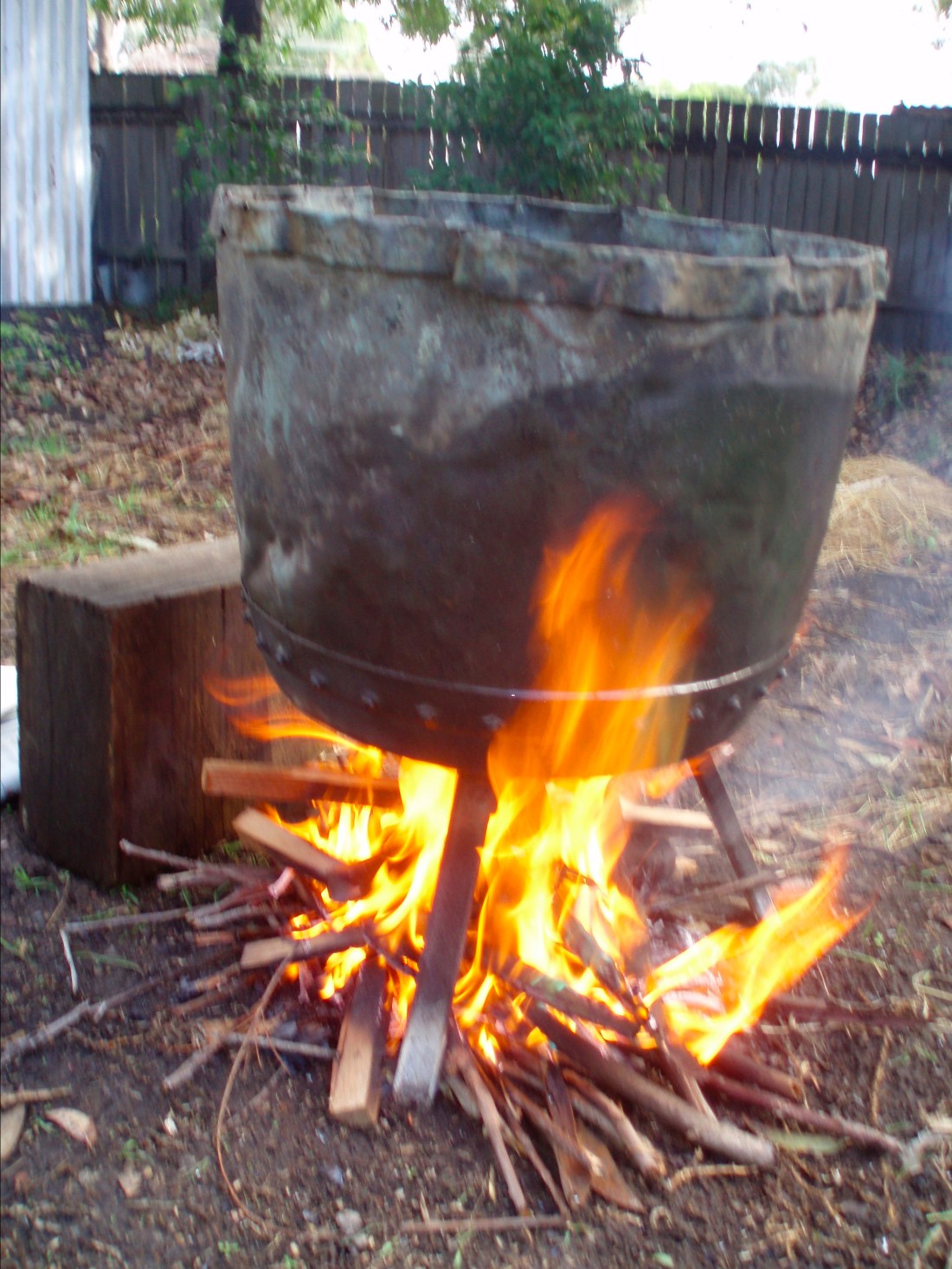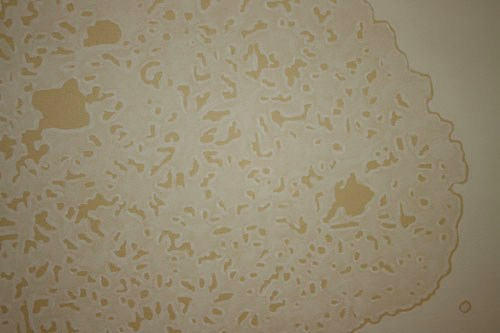
Some cauldron action with the help of my father Tibor and brother-in-law Jason Harding’s skill with a camera. The images demonstrate my attempts to use a non chemical means of neutralizing the bacteria that produces a shroud’s abject smell (which will reduce naturally over an extended period of time).
I have been given the opportunity to present at the minding animals conference in Newcastle on the 18th July. The conference runs from the 13th-18th and is filled with local and international speakers from many disciplines discussing animal/human relations.
Below is my abstract.
Becoming Animal: Investigating painting materials and processes that communicate current animal/human relations in Australia
Deleuze and Guattari’s definitive philosophical essay 1730: Becoming-Intense, Becoming-Animal, Becoming-Imperceptible 1987 examines symbioses between animals and human animals in popular mythologies. Their challenge to Western cultural constructions that view animal as other and becoming animal as a process of contagion is discussed in relation to my current practice-led research into the status of animals in Australian visual culture. My reflections on the human animal and becoming in Australian indigenous cultural traditions focuses on the study of animals in rock art and recent fieldwork in Gunbalanya, Arnhem Land. Comparisons between representations of animals in natural history illustration and indigenous painting in Australia seeks to discover the extent to which materials and creative process used in the production of imagery defines the relationship between the artist and their subject.
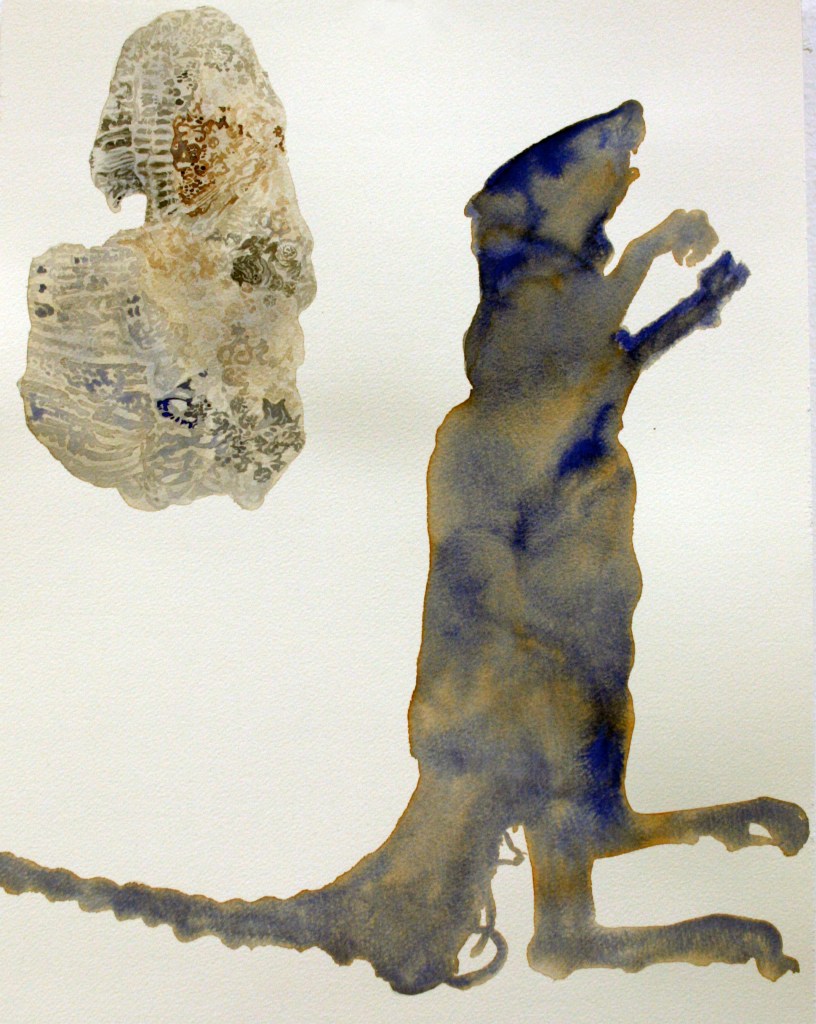
The second phase of my latest experiment in developing a shroud process indicate the black plastic and wet autumn weather created a moist environment which disintegrated the body dissipating definition in the body shape. The first male kangaroo shroud had a well defined body print as it was uncovered and made in summer during drought.
‘Winter Kangaroo 2009‘ 2011 Delek, rabbit skin glue, female eastern grey on canvas SOLD
What better preparation for the study of Rock Art than through first hand experience.
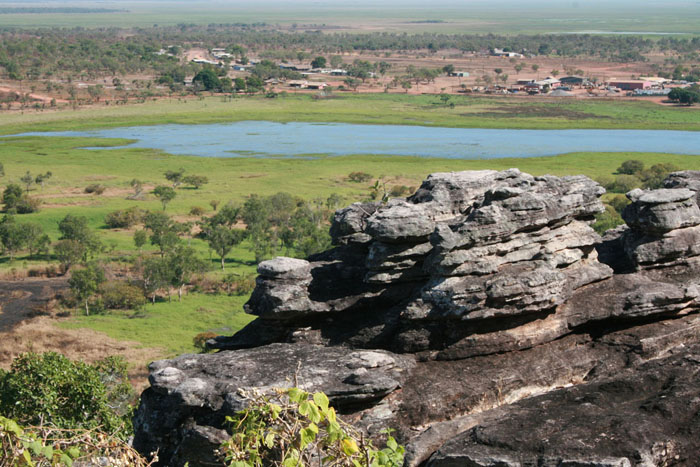
Its official, I am going on this field trip in Gunbalanya Arnhem Land from 20th June to the 4th of July. We are spending the last 3 days on the coast at Waminari opposite Goulburn Island.
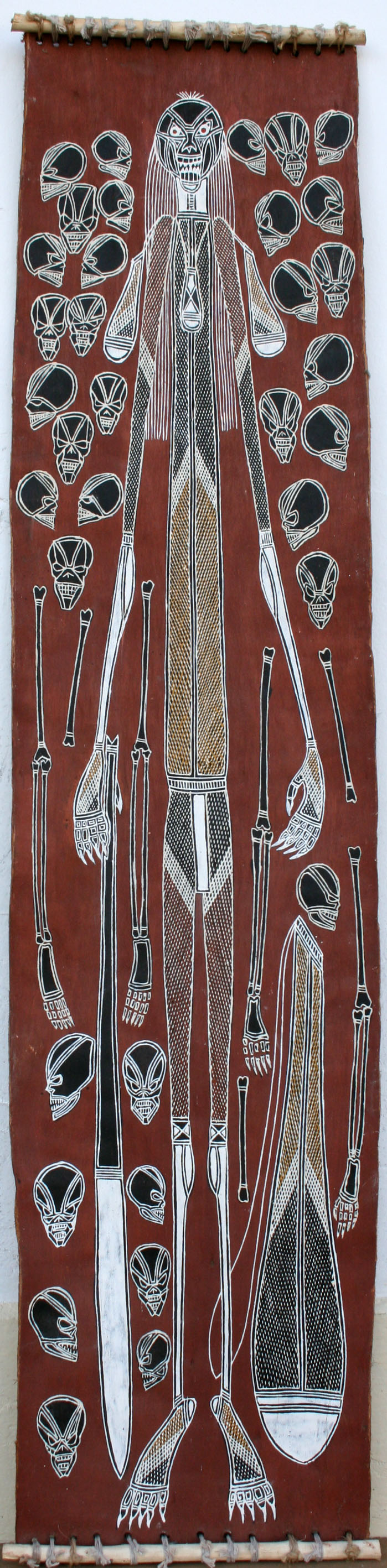
The local white rock when ground became a skin tone, symbolic transformation.
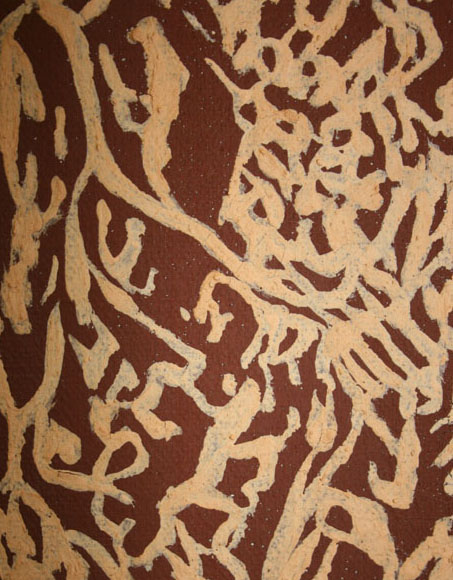
Upon the brown red ochre, a dialogue between skin develops, the figure and ground constructs the exchange.
Samson and Delilah by Warwick Thornton was inspirational. I noted the positive connections to country, kinship laws and language, the humour and the negative affects of the urban environment and fossil fuels.
Deleuze and Guattari capture my imagination in A Thousand Plateaus pages 32-3,
“Let us return to the story of multiplicity…It was created precisely in order to escape the abstract opposition between the multiple and the one, to escape dialectics, to succeed in conceiving the multiple in the pure state, to cease treating it as a numerical fragment of a lost Unity or Totality…continuous multiplicities…multiplicities of distance, which are closer to the intensive…rhizomatic multiplicities…micromultiplicites…libidinal, unconscious, molecular, intensive multiplicites composed of particles that do not divide without changing in nature, and distances which do not vary without entering another multiplicity and that constantly construct and dismantle themselves in the course of their communications, as they cross over into each other…their quantities are intensities, differences in intensity.”
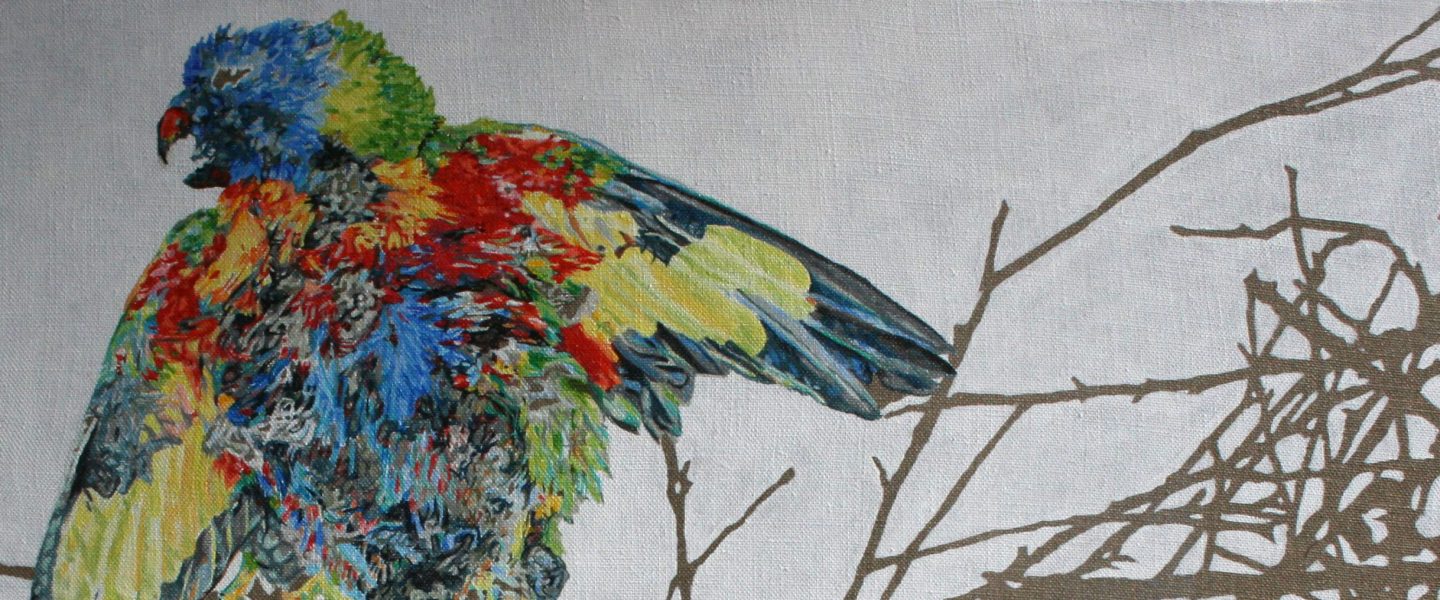
I was reminded of Deleuze and Guattari’s description of Freud and Jung while watching the birds
The induction presentations as part of Research Fest today were very informative. Alot of advice on supervision, research management, conferences, publishing and networking. We were told to write thoughts down each morning before reading (or practical efforts) to become habitual about it as writing is the most difficult part. This writing could be in the form of small papers or exploratory essays. In addition keep an interactive plan from the beginning that evolves into a chapter outline. Read critically and always write down responses (follow practical work with evaluations too).