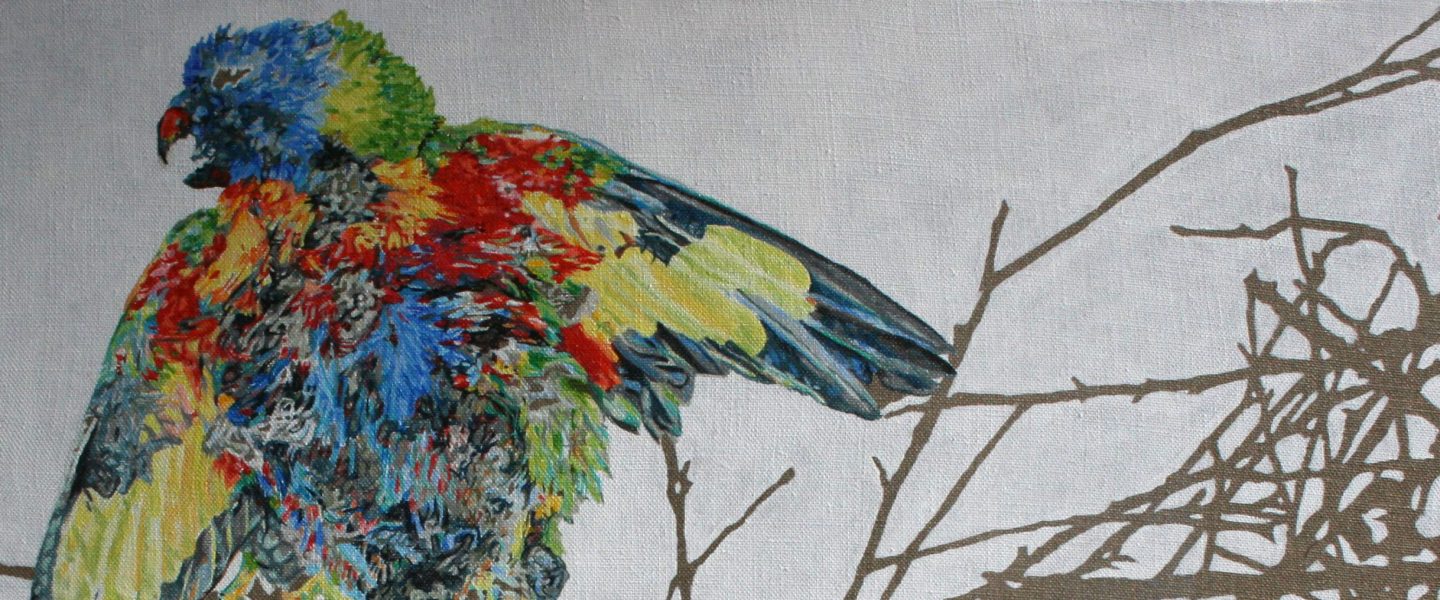

I am experimenting with my first fish shroud using pilchards on watercolour paper. I have installed the work in progress at mum and dad’s on the coast.
Elizabeth Grosz and umwelt
In a talk at Damien Minton Gallery, the art theorist discusses Art and the Animal
Road Kill and Steve Baker
The well known animal art writer turned artist now shares the same dead animal subject and discusses his experiences photographing roadkill with Susan McHugh.
Spring lambs
There have been many births on Tony and Steven’s sheep farm, but also death as some lambs and ewes don’t make it. Often its the crows pecking out the eyes of the weak or in distress, or there are difficult births such as a set of large triplets, two made it out while the ewe died with the third inside. the twins subsequently died. Ewes will sometimes abandon their lamb too and Steven and Tony raise as many of the orphan lambs by bottle feeding as they can. Their neighbor’s are helping too.
The dear sweet forms of the newborn lambs are often so slight. Another dead pregnant ewe was very heavy with the baby inside, the blood streaming out of her eyes show her death was caused by the crows blinding her.
While macabre, placing the lamb suckling her also commemorates her motherly state in death and attempts to reflect the time of death, spring lambing as the weather becomes warmer.
Chough and Starling
It was the dirty end of winter when I went with Adam and Tepi out to the farm for the chough and starling to be placed on a canvas together.
Tepi had found the starling on the farm, while I had encountered the chough dieing by the roadside amidst morning traffic. His kin surrounded him calling in distress. I moved him away from further damage under a tree and the next day found him dead.
Birds print so beautifully, their feathers being conducive to ‘drawn’ edges and a clean silhouette.
ANU open day painting sale
I have these two small paintings for sale at open day to raise money for the painting department
Processing the fox shroud
The collection of the fox shroud, its soaking in vinegar and drying prior to boiling in a eucalyptus leaf tea in the old copper cauldron.
Recent Works
Working into the shrouds using ochres collected in Arnhem Land and silk thread stitching is a studio process embedding my self in the bodily sensation of a becoming animal that is the decomposed matter absorbed by the canvas. The pure pigments of earth sit raised on the woven surface while clean thread penetrates the dank weave projecting a slight shadow upon the glittering skin of rabbit glue size.
Mosman Art Prize
I have this painting snare in the Mosman prize exhibition on from 30th July – 4th September
Waterhouse Natural History Prize
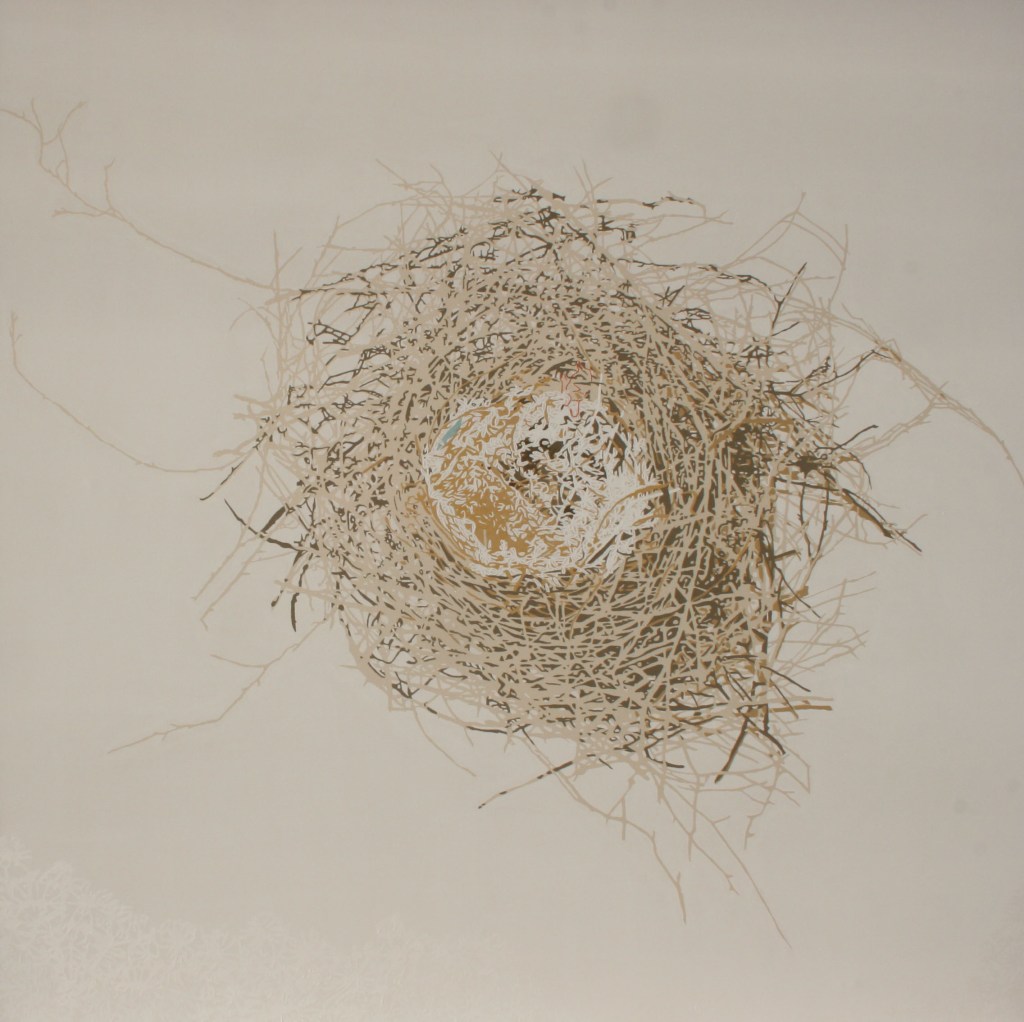
The SA Museum hosts the Waterhouse prize, and as an animal artist I submitted a work.
Imagine my surprise when I was awarded first prize in the painting category!
$10,000 is now prompting me to think about Europe, visiting my Hungarian relatives for the first time.
Their passion for art and the art practices of my father’s family being foundational contributors to my choice to be an artist.
I am also enticed by the Unsound festival in Poland organised by my friend Matt Schultz, a sound art celebration originally birthed by the Wagga Wagga Space Program formed by my partner Adam Bell and others including Matt’s brother Paul a singer/songwriter, artist/writer Johannes Klabbers and curator Sarah Last.
Thank you to all the human and non-human animals without whom this prize would not exist!


