Painting on bunny shrouds

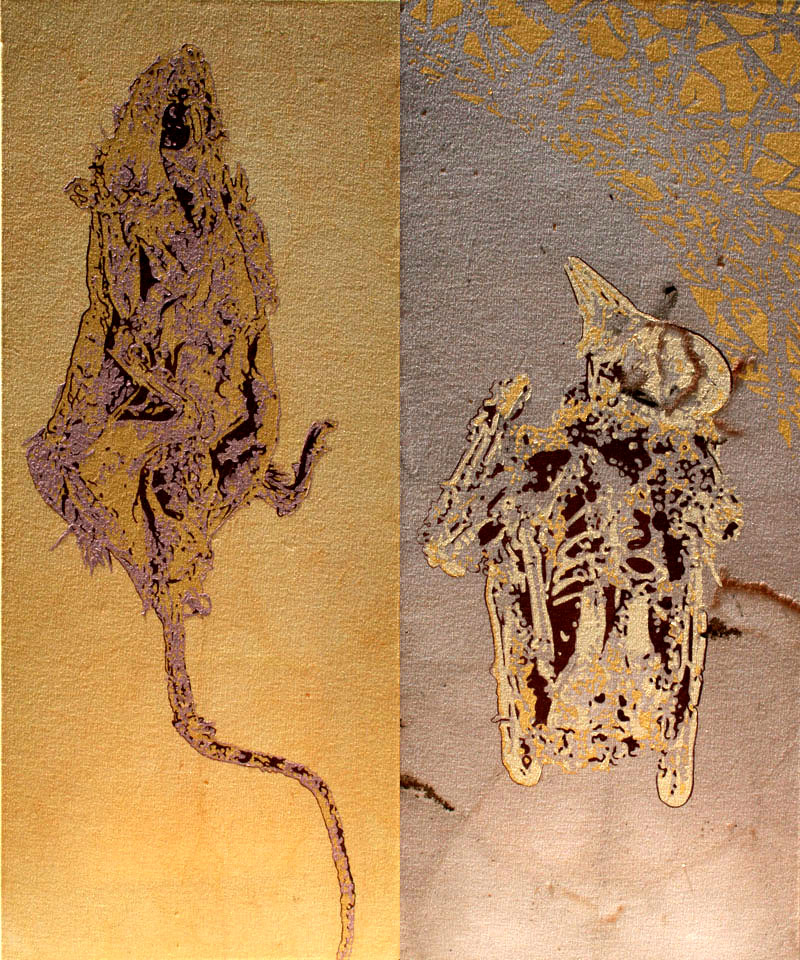
In the studio I am now equipped with supplies of ochre from around Australia, shrouds produced last summer featuring birds and rabbits (treated with vinegar, dyed in eucalyptus, stretched and sealed with rabbit skin glue), and images of the placement of bodies before and after the decomposition process and a projector.

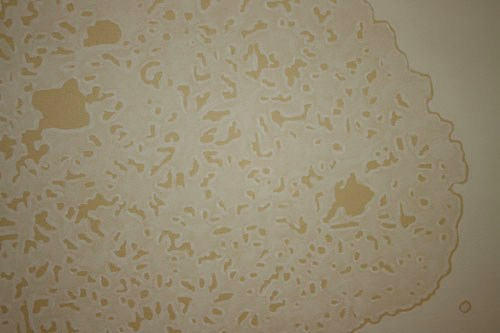
In the absence of a body, but the presence of a mark that embodies the presence of absence, I observe images of the full and desiccated body in a picture of light that communicates with the elusive tonal indicators present on a dank woven burial cloth. I fall into fascination with those indefinite stains, and resist further reconstruction of an internal presence.

In the first instance a particularly nebulous collection of fluid defies any visual recognition, so I introduce the silhouette simultaneously aware of the wire-mesh grid that also imprinted its dirt and rust stains inconsistently over the weave. I work from the projection of the whole body beneath the mesh using delek, the pure sacred shit of ngalyod, whiter than the whitest gesso. I define the in-between space of the mesh, as though the body is backlit and elevated in an alluvial substance. The body appears simultaneously arrested and freed, in motion and static, pure and defiled. The warping grid of mesh now replicates in the eye vibrating an after image that plays with any stains actually visible.

In the second instance a duel shroud offers, in part, some clearly defined limbs, stomach juices, even the suggestion of an eye, and I am held in the almost and slide predictably into the conversation between the light body and stain body. The results fall short of my expectations, there is a loss of curiosity and the compulsion to inquire, so I remove the evidence of my hand after playing minimally with the second bunny stain. Exploring the ochres from my own country (Yuin) I combine an orange-red with a yellow and draw the vertical mesh lines within the body only. It follows then the top bunny should contain the horizontal alternative.

http://www.flickr.com/apps/slideshow/show.swf?v=71649

djurra bim

Back in the cold Canberra studio my head is still full of what can only be described as the ‘Gunbalanya sensation.’ My thinner tropical body and expansive thoughts are ill-equipped for icy winds and stale indoor air. In this counter-physical cerebral space I surround myself with cherished djurra and dolobbo bim and lay out delek, garlba and gunnojbe, materials with people and places attached. Memories of freedom and warmth contract into a protective bubble around me. I continue the paintings I had started there, beginning with small ochres on cardboard begun in a painting workshop with Balang (Gersheim) and Nabulanj (Graham). I had purchased their works so I could finish my small copies. Parallel material and stylistic processes produce sensations of a specific nature distinguishable from subjective response or even experiential knowledge (although these are valuable tools in evaluating art as a product of the maker). In Gilles Deleuze: Image and Text, Elizabeth Grosz elaborates on sensation in the Deleuzian sense of the word as, “mobilizing forces…[that] lie mid-way between subjects and objects, the point at which the one converts into the other.” Art, as the producer of sensation is the inducer of becomings and I realise the extent of familial agency now activated by the other.

Rosella print

The resulting decomposition print appears clean as though the body protected the canvas from the elements and dried out rather than melting. I did not brush the canvas down or dye it in eucalyptus, only pulling it through the vinegar bath as the creamy colour of the canvas appealed and there was no smell evident. The drops of sap from the eucalyptus tree provide the reference to place.
http://www.flickr.com/apps/slideshow/show.swf?v=71649

Ochres and Dyes

Painting with natural substances; animal, vegetable and mineral, really is right for me. It makes me feel everything is the way it should be, connected to country. The country I’ve been and becomes a part of me.

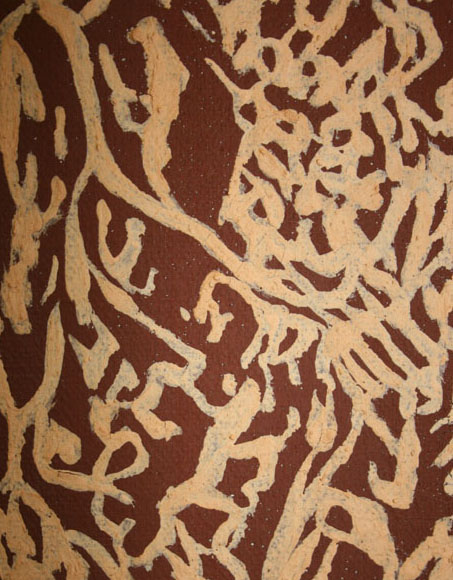
The image on the left uses canvas dyed in Gunbalanya with Clara and Juliet Nganjmirra from the root of the manjurndum plant. It was painted using ochres. The image on the left similarly dyed but using the root of the wirdil wirdil grass.

White local ochre and Samson and Delilah

ochremix
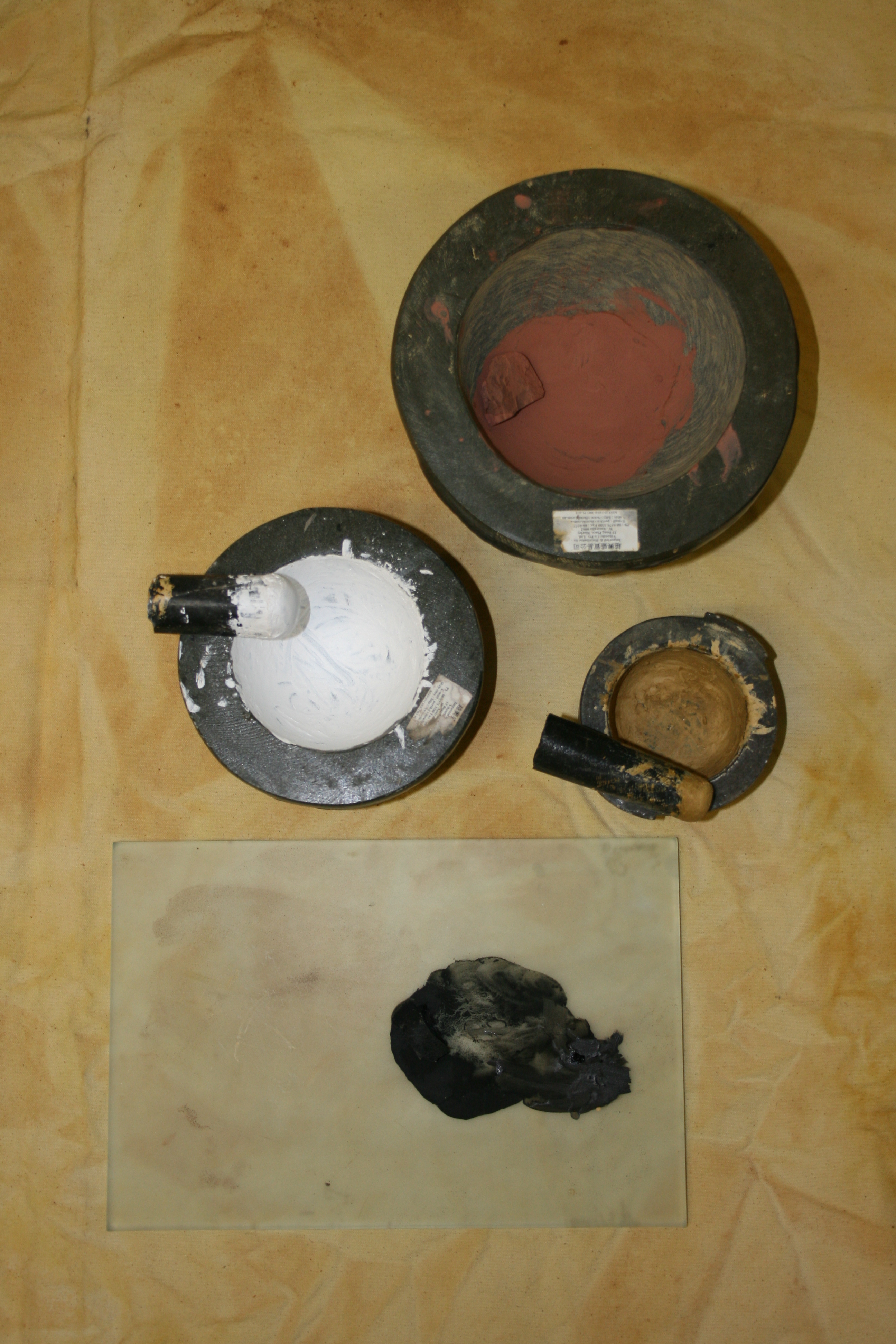
The local white rock when ground became a skin tone, symbolic transformation.

wiradjuridetail11
Upon the brown red ochre, a dialogue between skin develops, the figure and ground constructs the exchange.

Samson and Delilah by Warwick Thornton was inspirational. I noted the positive connections to country, kinship laws and language, the humour and the negative affects of the urban environment and fossil fuels.