


I recommend Born under the Paperbark Tree 1996 and Grief Gaiety, and Aborigines 1961 for an accurate picture of NT early last century from multiple racial perspectives.
Bill Harney jnr is a phenomenal man born into unbelievable circumstances like many others at the time. His performance of a mosquito at the ‘Barks, Birds and Billabongs’ symposium was the most remarkable and intense indigenous performance I’ve ever seen.
I hope to see him again in April on his Jankangyina tour of Wardaman country and the Lightening Brothers Rock Art.
The indigenous summit held over the weekend 29th January – 1st February demonstrates the issues concerning indigenous Australians. The live video footage recording the presentations and debates is worth viewing for an understanding of the political realities. Thanks to WGAR in Canberra (The Working Group for Aboriginal Rights) for their important work.
In reading ‘In Defense of Animals’ edited by Peter Singer, a collection of essays by various authors and activists, it becomes overwhelming as to the extent of the war human animals continue to wage against the innocent. Our twisted laws that view animals as property without rights and their subsequent torture and massacre through factory farming, scientific testing, and mass killings. Although the examples supplied in the text were all unbelievably horrific, and extinction rates due solely to humans alarming, the Monkeys discovered in 1981 who were kept in small uncleaned putrid metal boxes without vet care for scientific experiments in a basement provided the worst image in my mind. Their limbs had been deliberately been disabled through surgical interference to record how they managed, they were strapped to chairs and given electric shocks or burnt with lighters to record their reaction and in another denied food to record their levels of frustration. The monkeys were neurotic and were resorting to self mutilation, biting or tearing their fingers off, the worst being a monkey that had torn open its own chest cavity as a result of the torture and even in that state was still subjected to further experiments. Human society is very sick and has been for a very long time.
Anyone interested in animal rights should explore Animal Liberation and organisations such as People for the Ethical Treatment of Animals, formed by Alex Pacheco and others who notified the world about the monkeys mentioned above, and particular to Australia Voiceless.
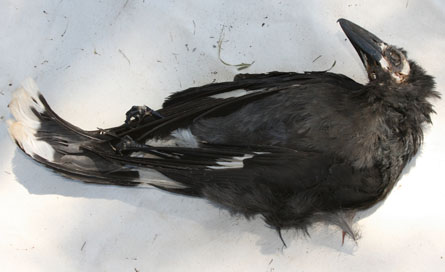
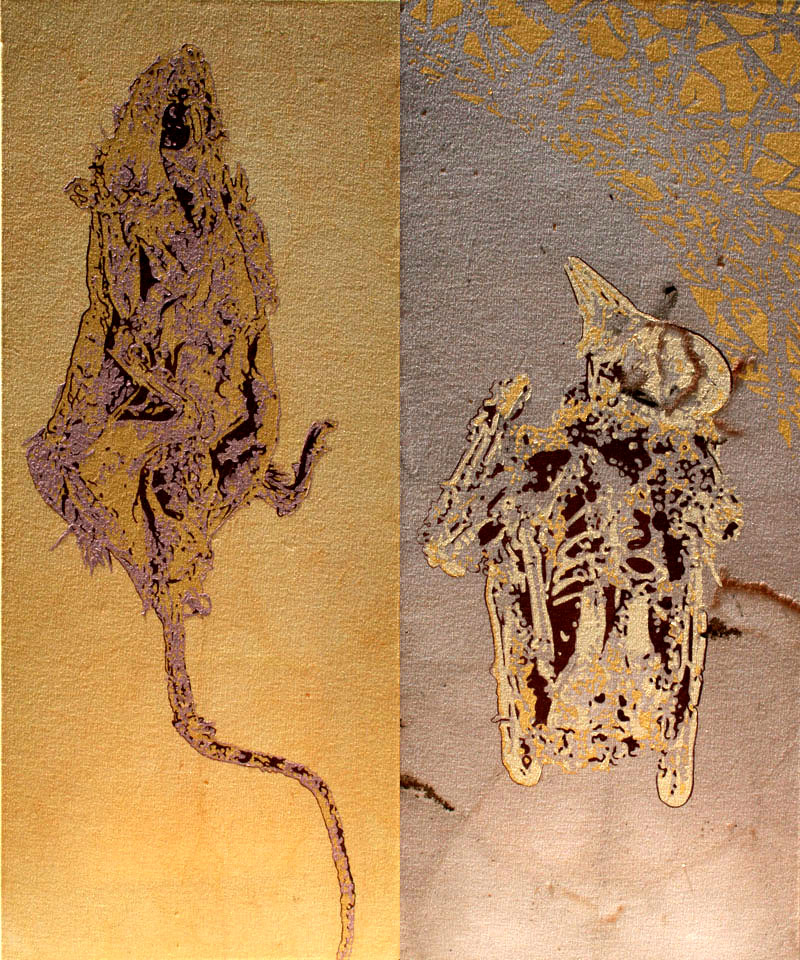
Summer in Canberra finally came, and my partner and I set up some new shroud experiments on the property of Tony and Steve. Many thanks to their support and to local hunter Paul for the rabbits.

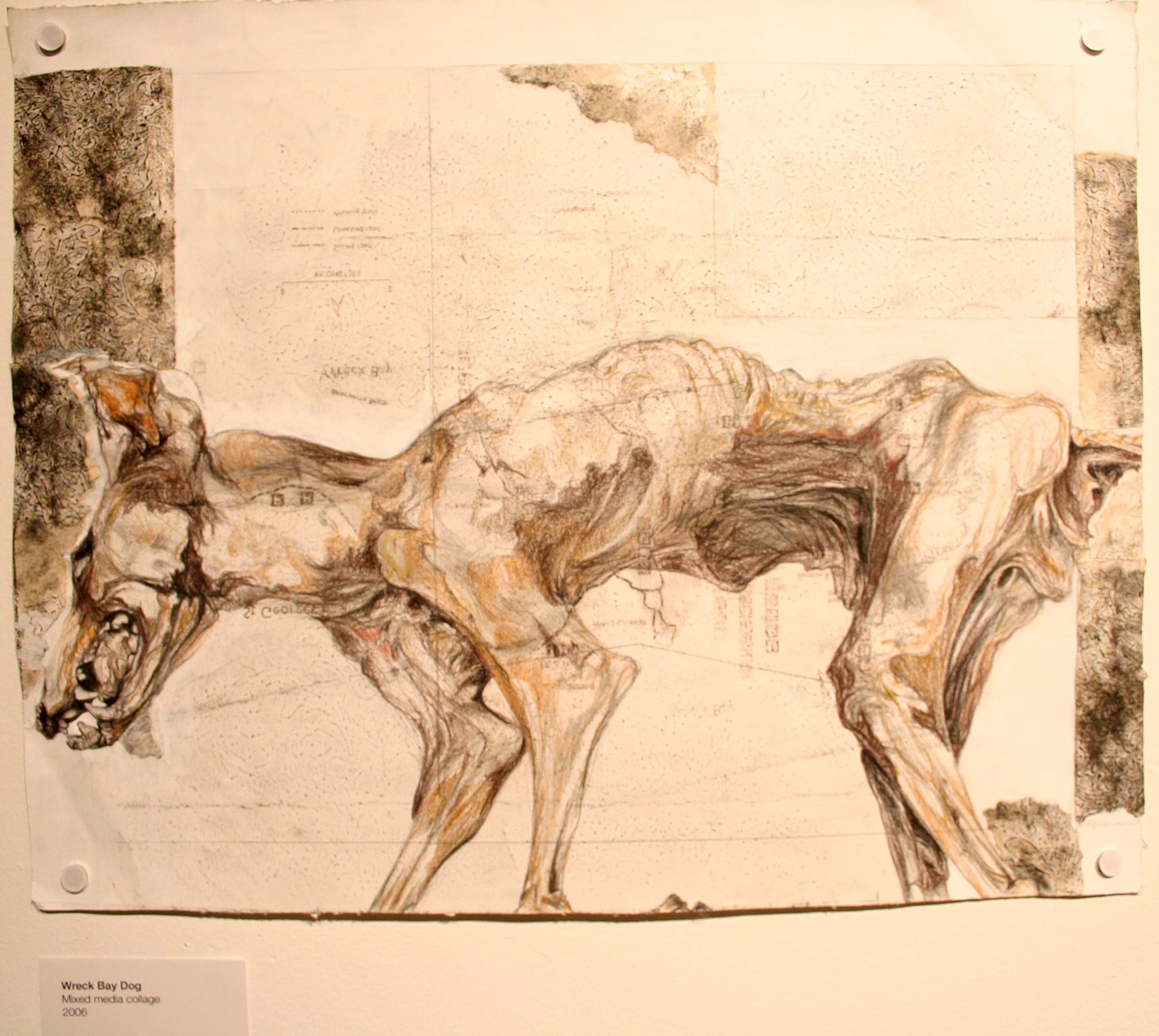
Booderee National Park is owned by the Wreck Bay Indigenous Community. This is the country where my mother and I were raised and my mother’s family established themselves. The Shoalhaven High School I attended taught children from my village Vincentia and Wreck Bay Village in addition to surrounding villages on Jervis Bay and St Georges Basin waterways. Indigenous storytellers in the area important to my education concerning the country in my soul are Wadi Wadi man Barry Moore and Bidgigal man Laddie Timbery.
Now there are a primary and High School in Vincentia and I am very happy to see a local indigenous language program developed at the High School.
In the preparation of ethics information and consent forms to formally ask permission from Kunwinjku speakers living in Gunbalanya or nearby outstations to teach me language and culture, I attempted translation into Kunwinjku.
My only reference in Canberra was the 1998 edition on Kunwinjku Kunwok produced by Steven and Narelle Etherington in consultation with members of the Gunbalanya community. The Kunwinjku Language Centre’s current Kunwinjku Language Project is managed by Donna Nadjamerrek, Ngalnarridj skin (kunkurlah) and a Ngalmok woman from well known outstation Kabulwarnamyo established by her father Wamud, respected painter (bim) of bark (dolobbo) and rock (kunwardde) using traditional ochres (delek). I met Donna formally in Gunbalanya at the Rock Art Field School and we spoke informally at the Barks Birds and Billabongs conference at the Australian Museum. I hope she will agree to teach me Kunwinjku kunwok, as I am determined to learn this wonderful ancient language of Australia.
Painting with natural substances; animal, vegetable and mineral, really is right for me. It makes me feel everything is the way it should be, connected to country. The country I’ve been and becomes a part of me.
The National Museum’s recent International Symposium exploring the Legacy of the 1948 American-Australian Scientific Expedition to Arnhem Land demonstrated the research and educational efforts, government funding and institutional support urgently needed to rectify indigenous and non-indigenous political relations in Australia.
The first and most important foundation, exemplified at the conference due to the diplomatic skill and vision of the steering committee Margo Neal, Sally May and Martin Thomas, is of course to allow indigenous communities to direct all matters concerning its members and the land, flora and fauna encompassed.
Only then is the true cultural exchange, desired by so many non-indigenous Australians, possible. Examples of such exchanges presented at the conference shone with inspirational clarity through the clouds and dispersed them. Yirrkala’s Mulka project is a Yolgnu multimedia archive dynamic in content. Both past and present expressions of cultural knowledge warrant this digital keeping place initiative, owned and orchestrated by the Buku-Larrnggay community.
Gunbalanya’s vision for a Arts and Cultural Innovations Centre where important material culture chosen by the community from museum and gallery collections such as paintings, sculptural and fibre forms or recordings of dance and song cycles, can be exhibited. Where current creative and cultural practice can also be valued and encouraged, and the cultural educational experience of children supported.
Databases used by museums to record indigenous material culture can only be enriched by the knowledge of indigenous people, therefore communities need such databases in their own cultural centre. Then work such as that carried out by Sabine Hoeng with artists of Croker Island, are enabled. Families can be reunited with items made by or connected to their ancestors and their histories remembered in the correct and most respectful ways.
At the National Library this month. Highly recommended, inspirational plateaus of intensity. I’ve been a couple of times and find the note books of lyrics consume me in a memory vortex. Multiple messages, meaning generators in darkened and private chambers.
 Laomedia